LARAMIE, WYOMING— *Cassie was trafficked from age 14 to 27. She wound up in a hospital in the United Kingdom, paralyzed for three days before she caught her literal train to freedom. Back then, in 2000, her story was shocking, unheard of even.
People and law enforcement were just beginning to discover the stories and trauma associated with trafficking.
“I could hear what was happening in the other rooms but would think, at least what’s happening to me isn’t as bad.” Cassie said. “You have to survive. If I saw someone else looking scared, I’d think at least it’s not me. It’s hard for me to live with the fact that I know some women disappeared—I feel guilty.”
Her situation ranged from escort to faux-girlfriend to working for a friend who sent a queue of men into her bedroom for money. Once, Cassie was locked in a man’s apartment for eight days.
“Men knew no one would believe us back then,” said Cassie. “No one really listens to or believes in prostitutes even now. I don’t know how I made it out alive. My body was pushed to the limit but it wouldn’t die. Mentally, I had closed myself down. If I had thought about what was happening, I would have been scared. If I had been scared, I wouldn’t have survived.”
“Although human trafficking is not a new evil, it was recognized throughout the world as a pervasive and insidious issue starting about 2000-2001,” said Ashleigh Chapman, founder of the Alliance For Freedom, Restoration, and Justice (AFRJ). “Human Trafficking has only been acknowledged since 2008 as a problem in the US as well.”
There are 25 types of human trafficking present in the United States. Survivors have been identified in such industries as restaurant and food services, hotels and hospitality, commercial cleaning services, construction, health and beauty services and more. They include men, women, youth, children and entire families.
“A frightening statistic that demands we ramp up the fight against human trafficking is the average life expectancy for trafficked people,” Ashleigh said. “Less than seven years can someone withstand the abuse and the mental, physical and emotional tolls being trafficked can take.”
There is hope.
“Absolutely, there is hope,” insists Ashleigh. “Trafficking exists because we have allowed it to exist. But that also means we can stop it. Each of us is uniquely positioned to step into this fight.”
Here are some signs Ashleigh says people can watch for to identify if someone is being trafficked:
- The person has no control over what they’re saying or what they have.
- The person is withdrawn, and someone is always answering for them.
- The person does not control their own papers. Someone else is showing that person’s ID or holding their passport.
- The person has cuts, has untreated injuries or is bruised.
- The person seems to be receiving big, expensive gifts. They are suddenly wearing fancier clothes and accessories.
- The person has an older “boyfriend.”
- The person displays a sudden or dramatic change in behavior.
- The person is fearful, timid, depressed, anxious or submissive.
- The person has a new tattoo which can be a pimp’s way of branding that person.
- The person has poor hygiene and is malnourished.
- The person claims to be just visiting or is unable to clarify where they are staying.
“If you’re even remotely suspicious about the possibility of trafficking, do not hesitate to call,” Ashleigh said. “Your call might be the final piece of the puzzle for law enforcement to move.”
Call both the National Human Trafficking Hotline (1-888-373-7888 or text Info or Help to BeFree 233733) and local law enforcement.
“It’s important to know who is suffering in your community and why,” said Ashleigh. “We need to support stronger laws about perpetrators and buyers. We need to look at the bigger picture to create solutions that make sense and to be strategic.
“We all have a part to play, and there is enormous opportunity to step in and work together as a community. The enemy is preying upon the most vulnerable; that should enrage us. We need to be better than the traffickers at what we do.”
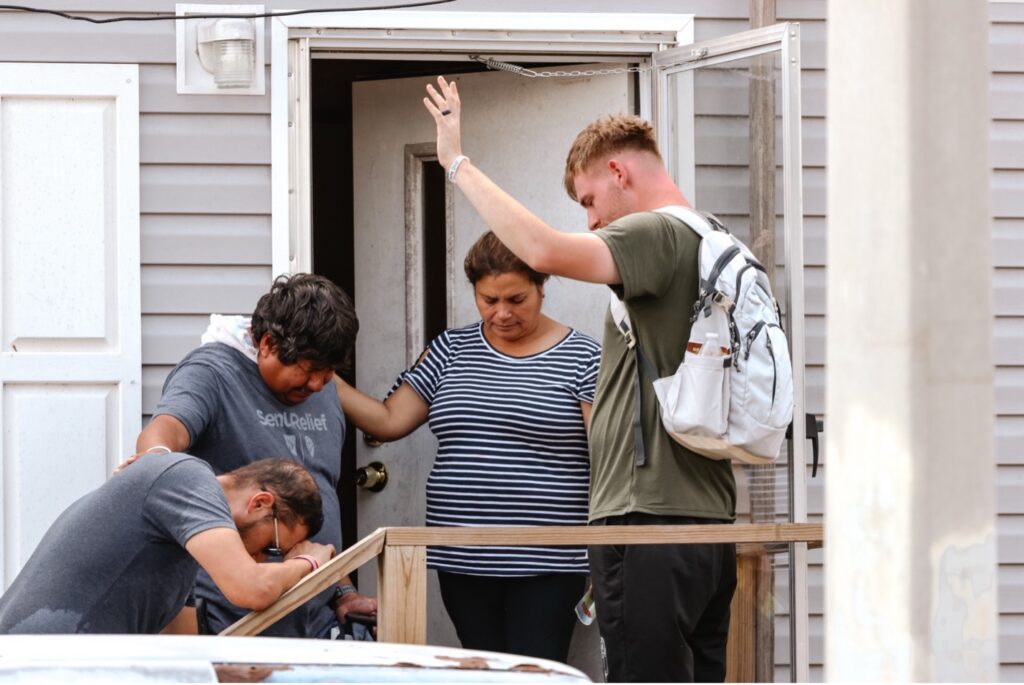
To engage in the fight against Human Trafficking and help people like Cassie, visit sendrelief.org. Or, join the AFRJ’s awareness campaign at engagetogether.com.
Josie Rabbitt Bingham writes for the North American Mission Board.
*names changed to protect the identity of survivors.