Hidden Hunger
Along the Andirá River, moisture hangs beneath the jungle canopy, surrounding everything in a soft warmth that makes this place feel slower and stiller than the rest of the world.
Mariane sits in the shade with the other mothers, watching the children nearby.
Most stay close. One child leans against his mother’s leg. Another curls into a lap. No one is racing through the village or clamoring for attention. The children move through the afternoon at the same unhurried pace as everything else around them, and to an outsider, nothing seems unusual.
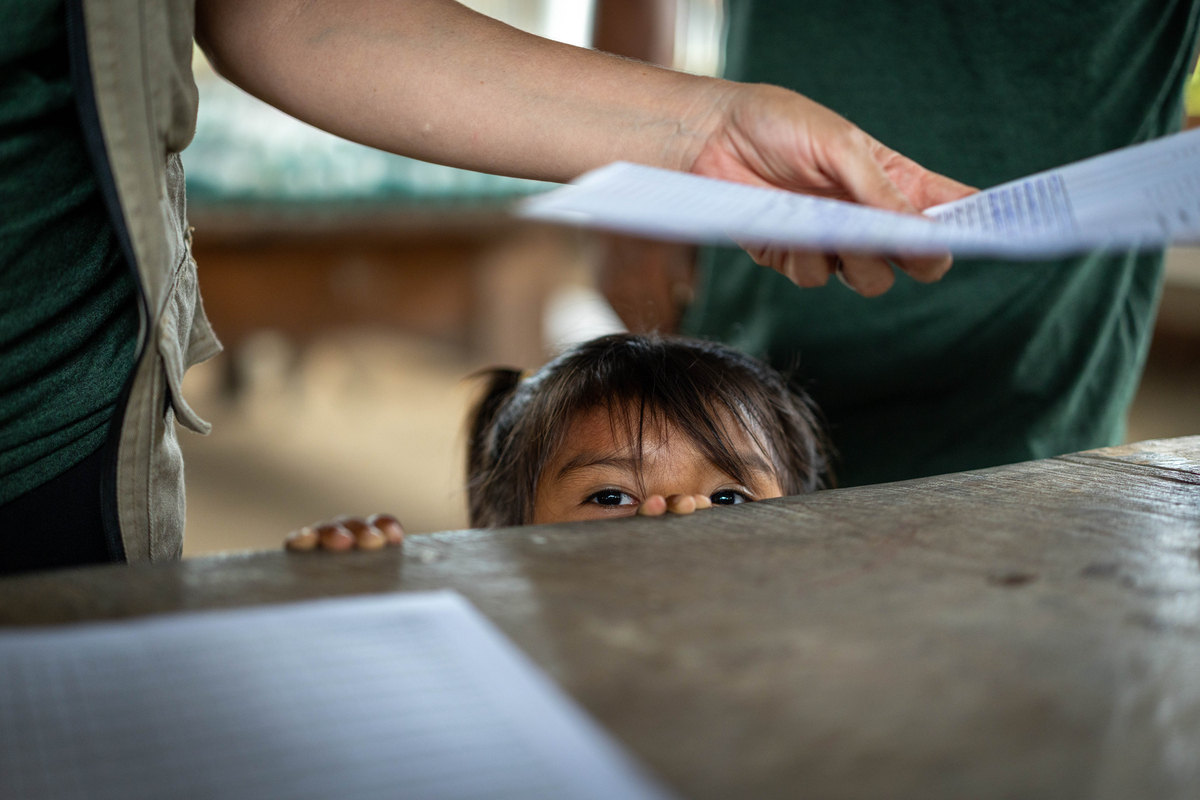
The harder question, the one no one had asked, was whether these children were resting or if they were fading.
The children are small, but so are their parents. They move slowly, but the air itself feels slow here. Expression is reserved. There is always an explanation that seems to fit.
Mariane never questioned any of it. Why would she?
This is what children are like here.
What the River Cannot Give Them
The Andirá River winds through the Brazilian Amazon, connecting a string of Sateré-Mawé communities scattered along its banks. Life here is shaped by what the river provides and what it does not.
Food is not absent, but it is limited. Meals are built around what lasts, what stretches, and what families can afford. Rice. Dried yucca. Popcorn. Foods that fill a stomach and carry a family through the day. What is harder to find is protein.
Despite the river’s presence, fish are scarce in this stretch of water. With most families living on roughly $400 a year, buying meat is rarely an option. Children grow up on full plates that do not always contain what growing bodies need.
The effects are easy to miss. A child tires more quickly than his peers. Another remains smaller than expected. Illness lingers longer than it should.
But when nearly every child looks the same, there is nothing to compare it to and no reason to ask a different question.
What Grace Noticed
The first time Grace Russell traveled along this stretch of the Andirá River, she did not arrive expecting to uncover a hidden problem. What she saw was visible. It had simply become normal.
Grace is a Brazilian nutritionist who, along with her American husband Daniel, serves as a missionary in Manaus. She had seen malnutrition before, but here it presented differently. The children were not visibly starving. They were cared for, fed, and surrounded by family.
And still, their bodies told another story.
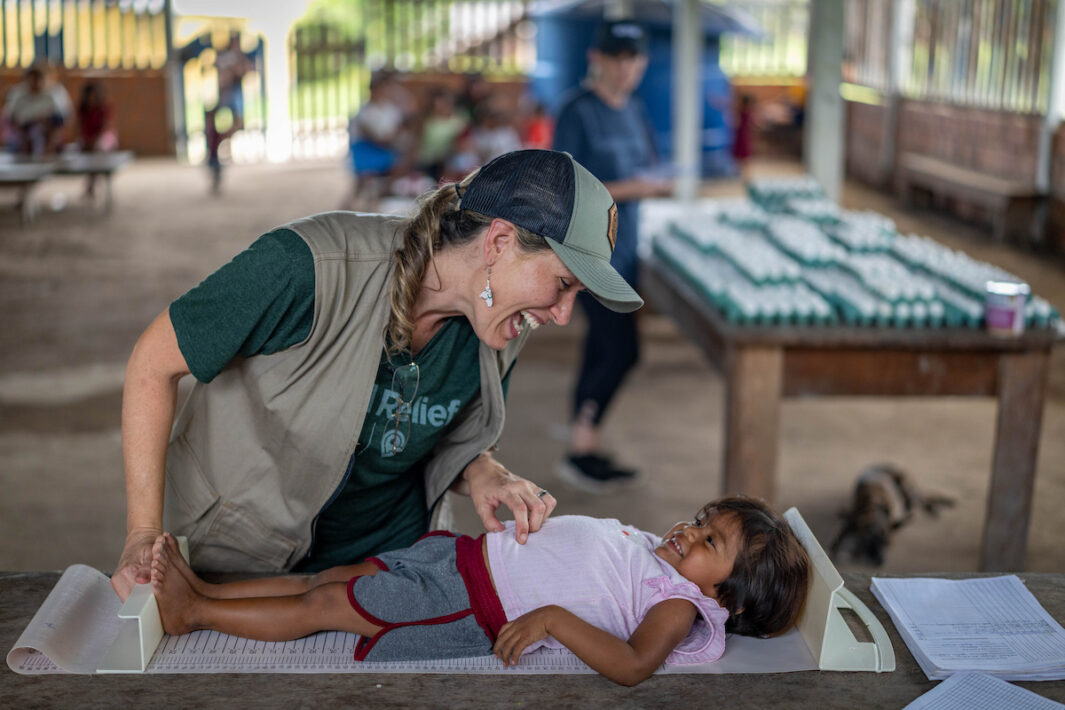
Working alongside Casa Nutri, a ministry dedicated to combating childhood malnutrition in some of the world’s most forgotten places, Grace and her team began measuring children across 15 indigenous communities along the Andirá. What they found was alarming.
“When we first visited these communities, nearly 50 percent of the children showed signs of stunted growth,” she says. “After five years old, it becomes very difficult to reverse. That is chronic malnutrition.”
In all, 92 children under the age of five were enrolled in the nutrition program. Each one had a family that loved them and fed them. Many of those families had no idea their children were malnourished.
Among them was Mariane and her three-year-old son, Ranison.
The Gap Between Full and Healthy
“Many children don’t die from hunger itself,” Grace explains. “They die from diseases like malaria or pneumonia because their bodies are too weak to fight.”
Worldwide, nearly half of all deaths among children under five are linked to malnutrition. Not because children are starving, but because their bodies lack the strength to fight what comes next. For families along the Andirá, that danger is both invisible and common.
The Boat That Kept Coming Back
When the team returned, Mariane brought Ranison for an evaluation.
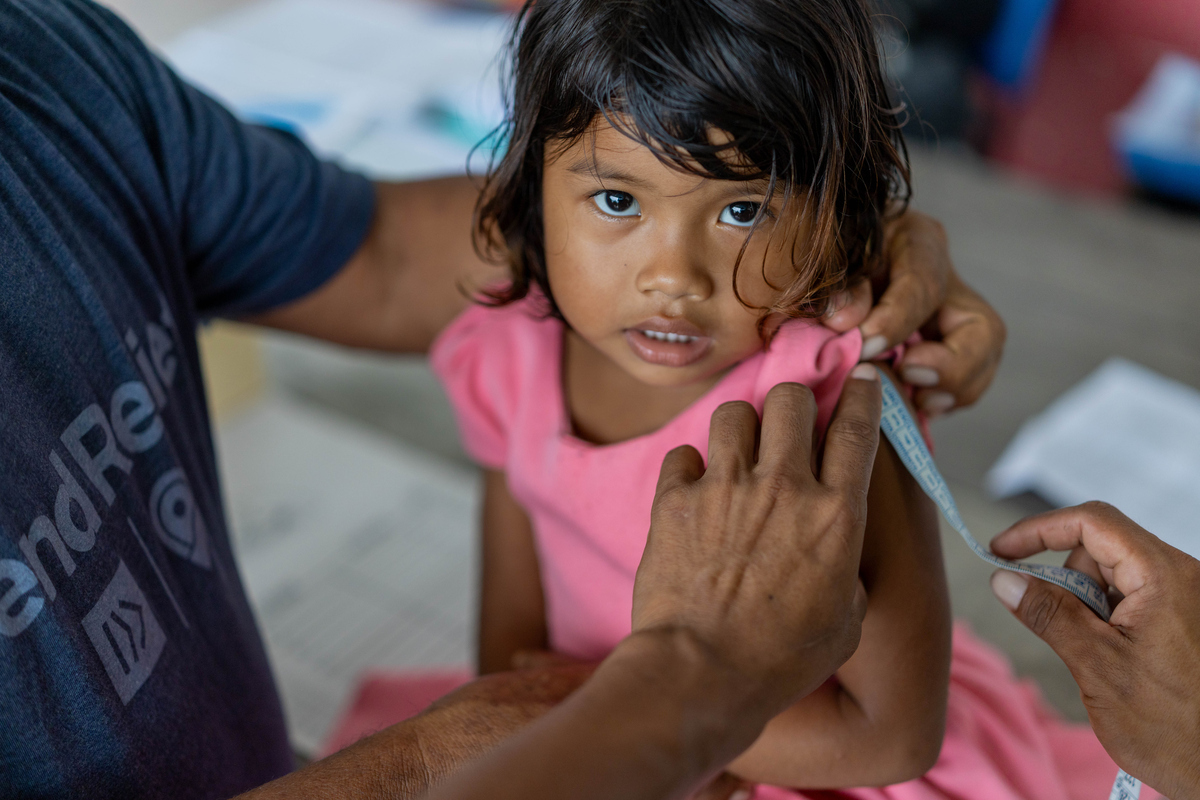
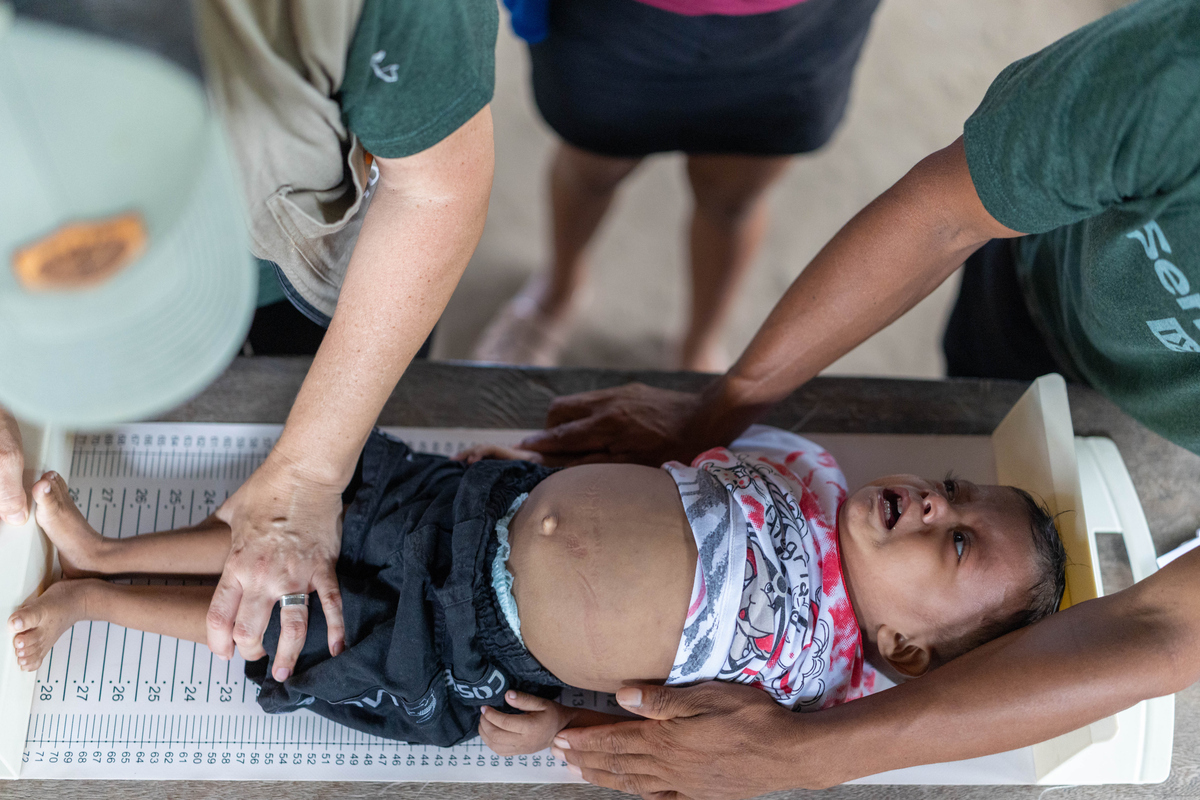
She stood nearby as his height and weight were recorded and a small measuring tape was wrapped around his arm. She did not understand every number being written down, but she understood that someone was paying close attention to her child in a way that had not happened before.
That attention mattered.
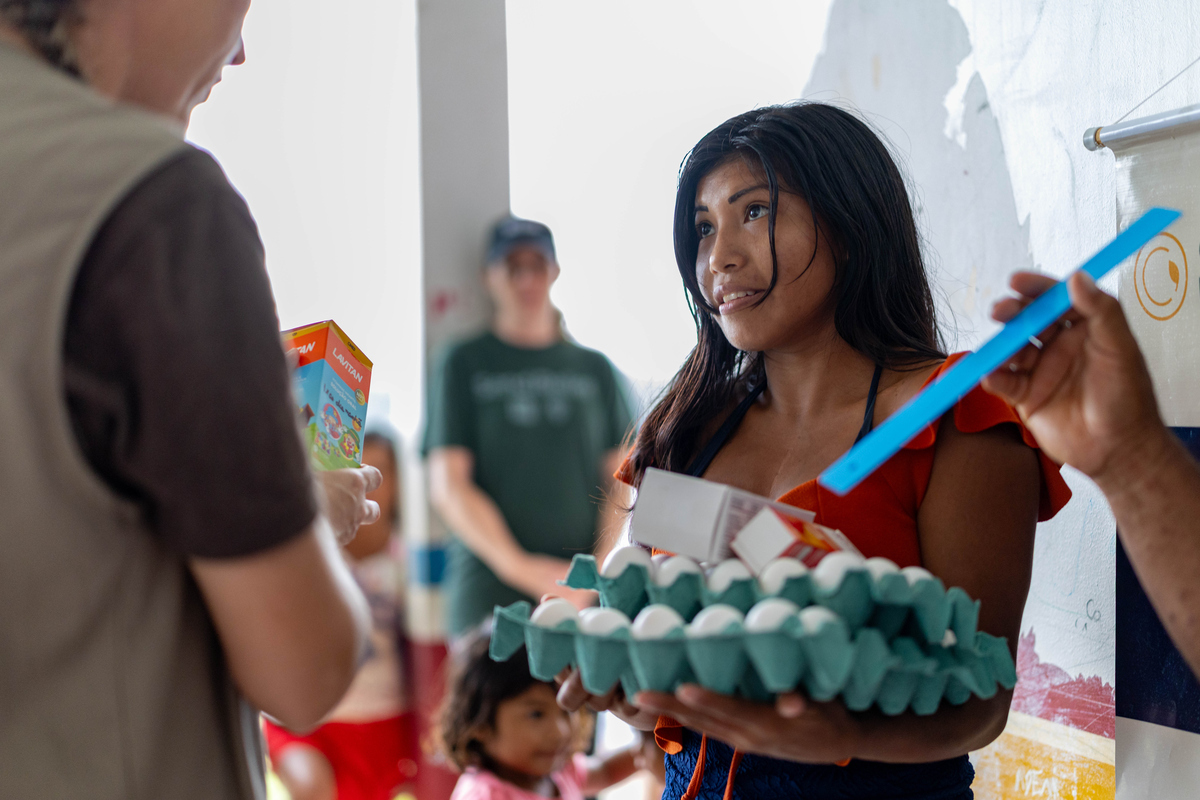
What changed Ranison’s life was not a single visit. It was the fact that they came back. Every two weeks, a boat arrived carrying eggs for the children enrolled in the program. Every month, the team returned with supplements, new measurements, nutrition education, and prayer. The care was simple, practical, and consistent in a place where consistency is hard to come by.
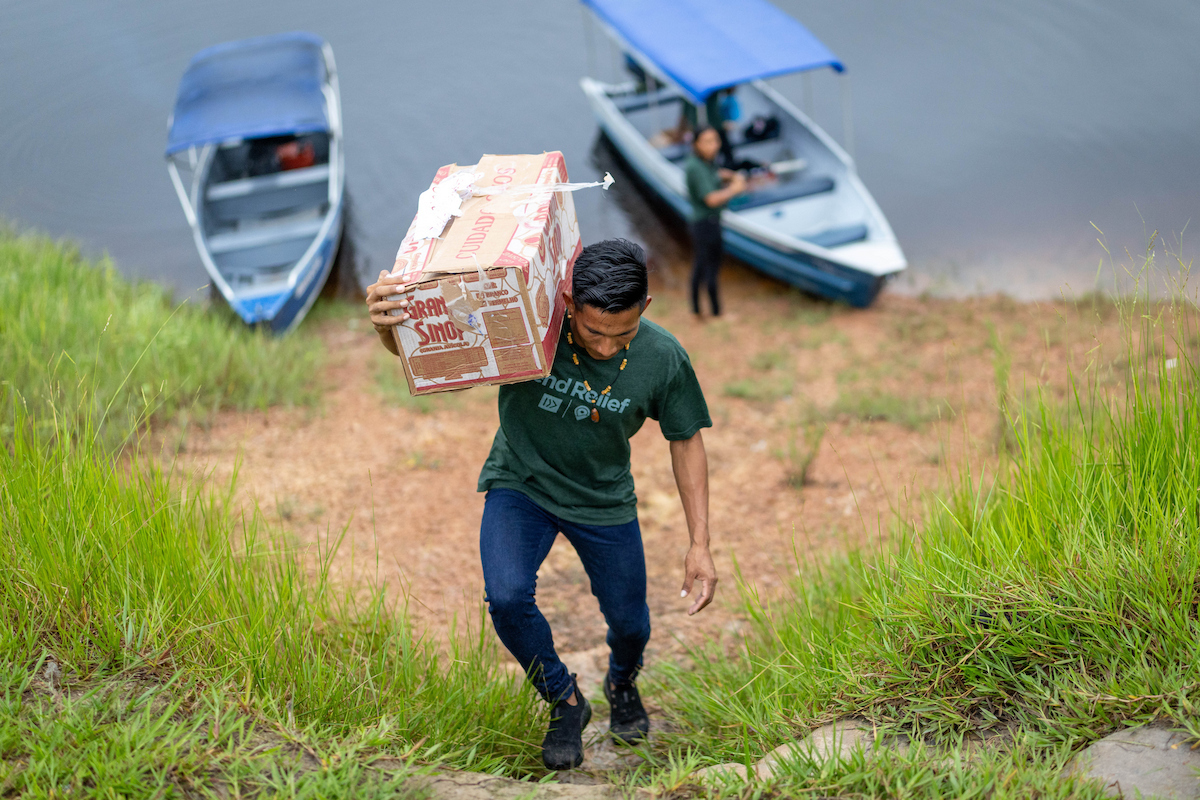
Mariane and Ranison came every time.
The Boy Who Learned to Run
At first, the changes were easy to dismiss.
Ranison began eating more consistently. He spent less time in his mother’s lap and more time following older children around the village. His strength came back gradually, then steadily. He walked with more purpose. He started to play.
“It is so beautiful to see the kids getting better,” Grace says. “They come in so quiet, with no energy. And we see, month after month, the child getting better, getting healthier, running around, eating much better, and smiling. You know, malnutrition, sometimes the child cannot live and smile.”
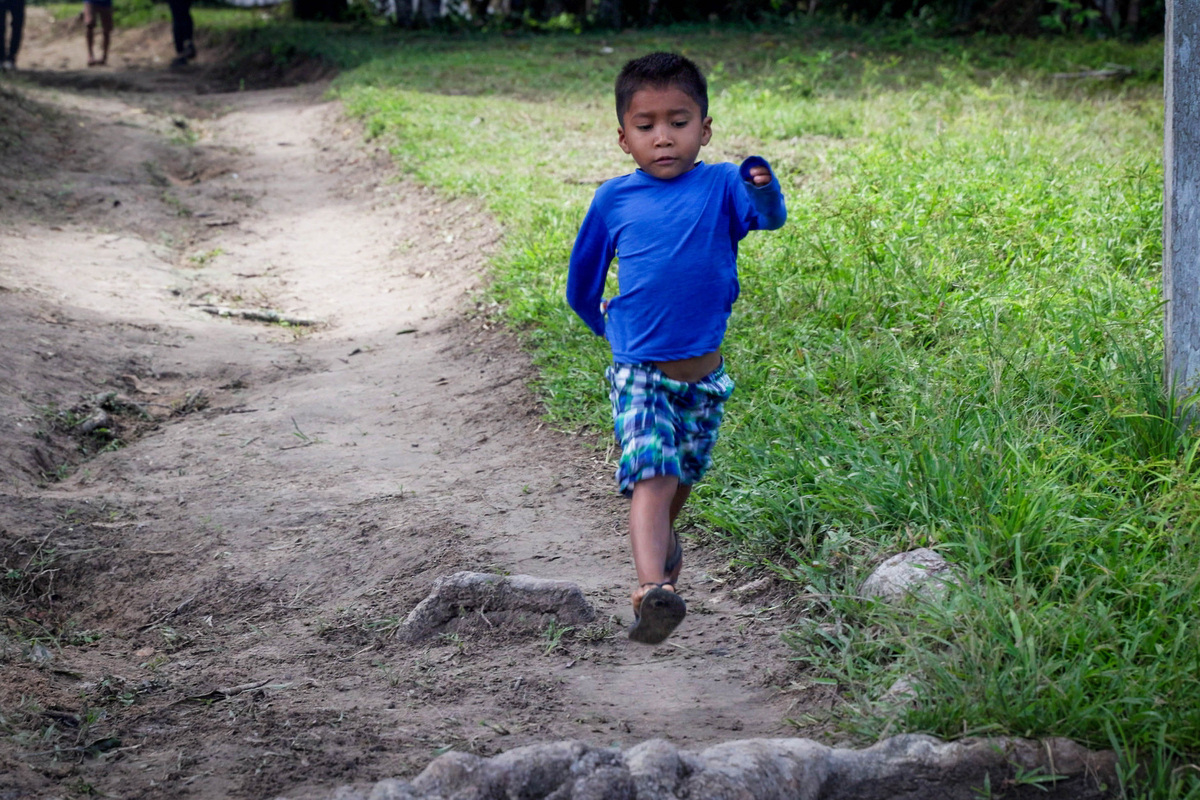
Eventually Ranison started running, bounding down the grassy hill every two weeks to meet the boat carrying missionaries, volunteers, and the eggs that had become part of his story.
When the measurements finally confirmed what Mariane could already see, Ranison became the first graduate of the nutrition program along the Andirá River, a ministry supported by Send Relief. For Mariane, the results did not require charts or statistics.
She could see them.
A Mother Who Stayed
Mariane did not step away once her son was healthy. Instead, she joined the team.
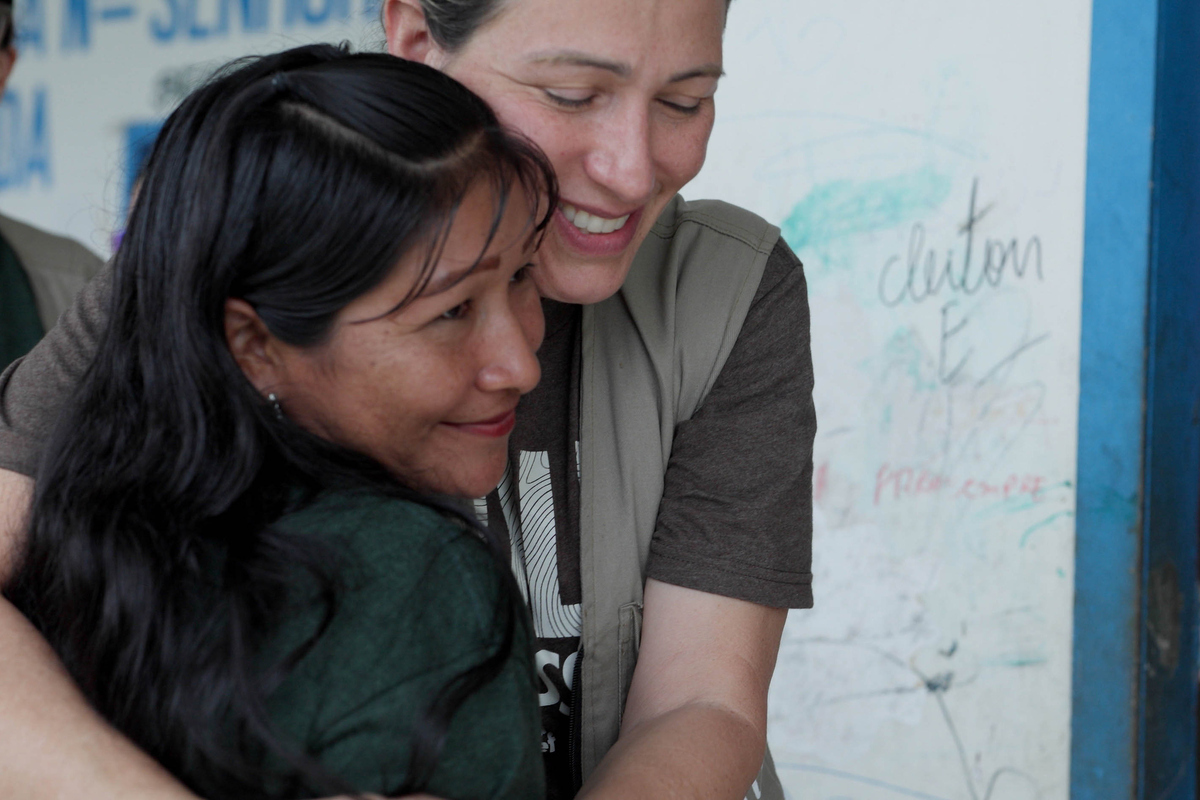
Today she helps measure children, distribute eggs, and translate from Portuguese into Sateré-Mawé so that nothing is lost between what the team knows and what a mother needs to hear. She sits with younger mothers, answers the questions she once asked herself, and tells them about Ranison, what he was like before and who he is now.
Her presence is the bridge, the proof, and the testimony all at once.
The nutrition ministry did not come to Bom Samaritano by accident. For decades, this village had been learning what it looks like to trust Christ, care for one another, and welcome people who come in His name. That story began long before Grace arrived carrying a measuring tape.
A Village That Sings
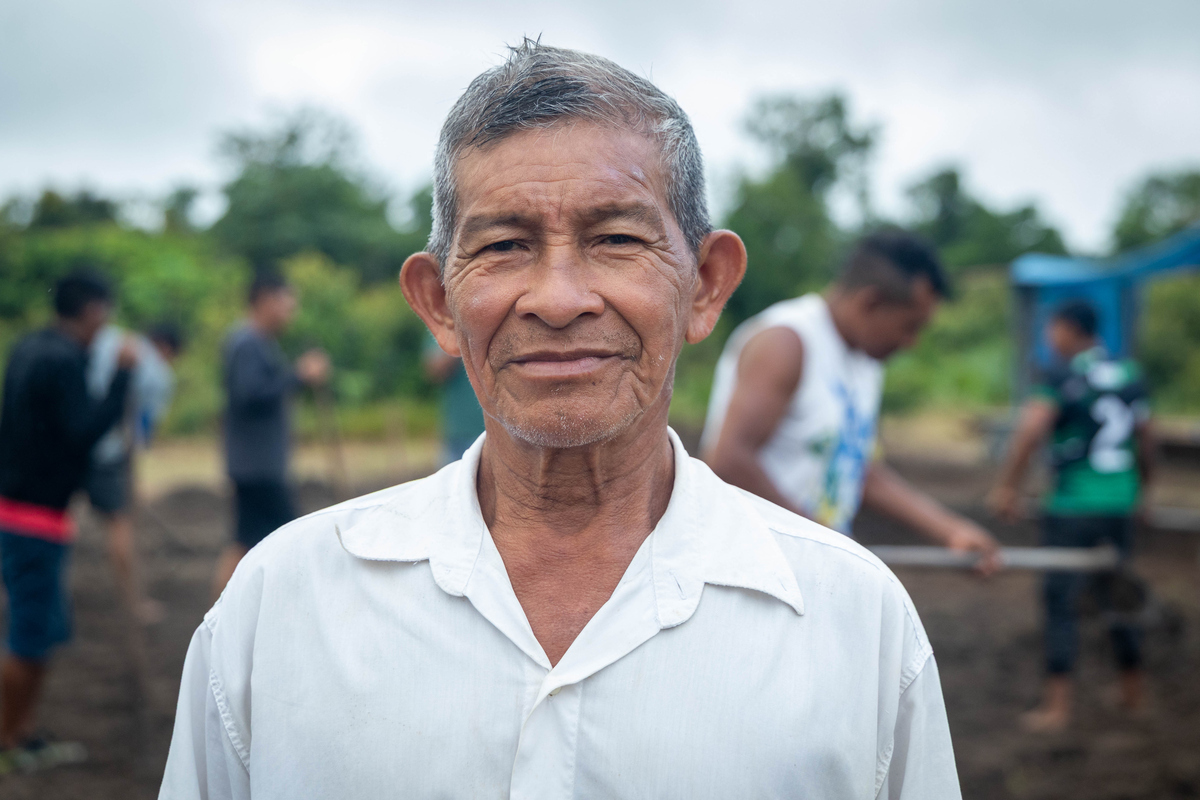
The chief of Bom Samaritano is a man named Josué. Among the Sateré-Mawé, leadership is earned through endurance. To become a man, a boy must survive the bullet ant ritual 20 times. To become a chief, he must endure it far more than that.
Josué endured it more than 40 times.
When Send Relief team members witnessed the ritual in a neighboring village, they heard it before they saw it. Chanting drifted through the trees, low and rhythmic, drawing them toward the center of the community. Men stood shoulder to shoulder around a teenage boy whose hands were buried inside woven mitts packed with bullet ants, their stingers pointing inward. Seed rattles strapped above his knees turned every involuntary stomp into sound.
Around the edges of the village sat the boys who had already completed the ritual, curled into themselves. One wiped tears with bandaged hands beneath a tree. Another pressed his face into his shirt while two friends stood nearby in silence. A third rocked back and forth outside the dining area, crying between shallow breaths.
No one rushed to comfort them. The pain was the point.
Just a short walk away, the nutrition team was measuring toddlers and preschoolers. Tiny faces. Tiny hands. It was impossible not to do the math.
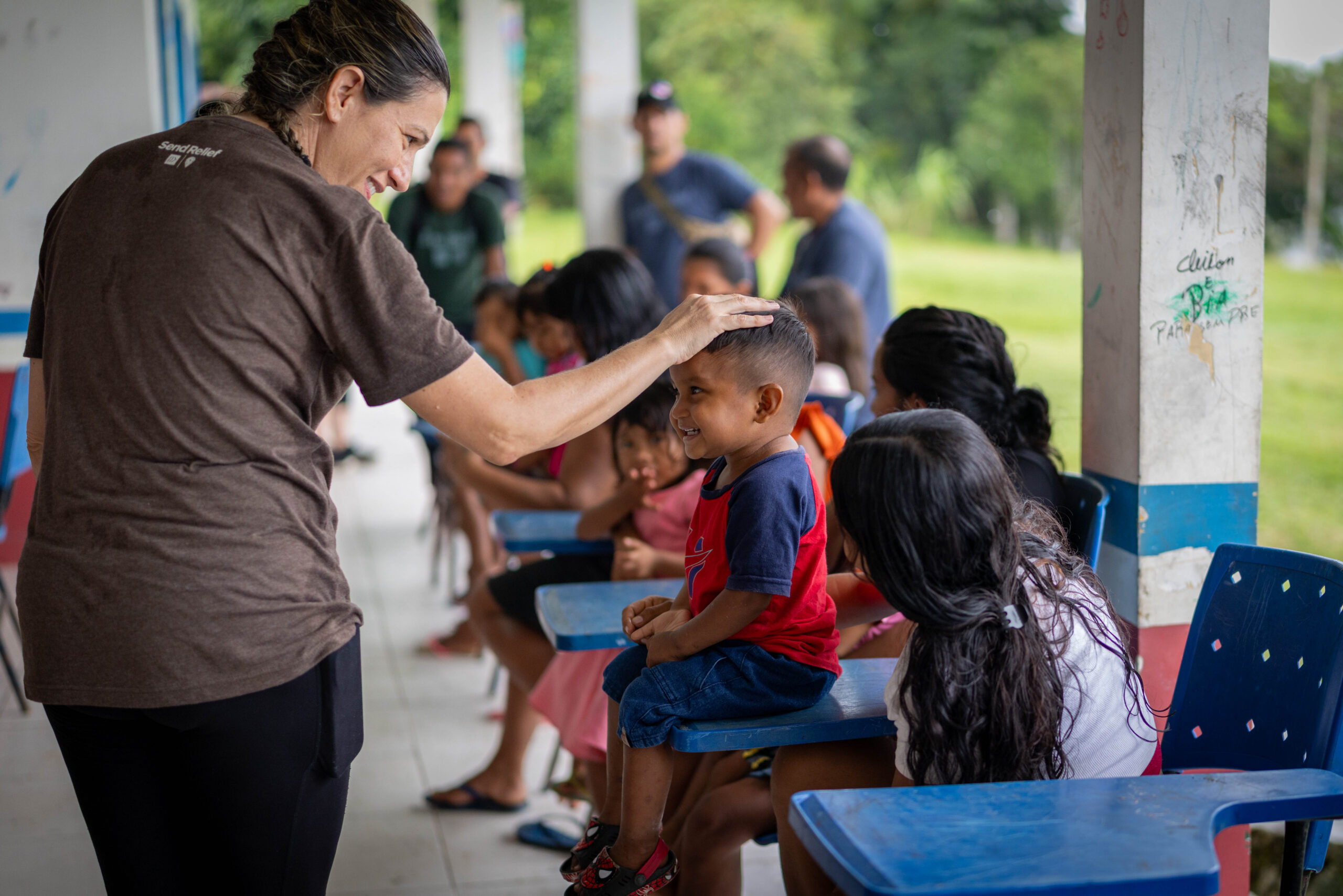
One day, many of those children would be expected to link arms for their own ritual, shaped by a worldview that says strength must be suffered into existence and identity earned through pain. It is still practiced in most Sateré-Mawé villages along the river today.
Josué once believed that too.
Then, in the 1980s, an American missionary couple arrived and spent eight years translating the Bible into the Sateré-Mawé language. Through that work, Josué heard the gospel for the first time. He learned there was One who had already suffered on his behalf, so that no one would ever have to prove their worth through pain again.
In Bom Samaritano, that worldview met the gospel.
And the gospel won.
The transformation did not stop with Josué. His children grew up in faith, and their children did too. Today, as evening settles over the village, families gather and voices rise together in worship songs written in their own language.
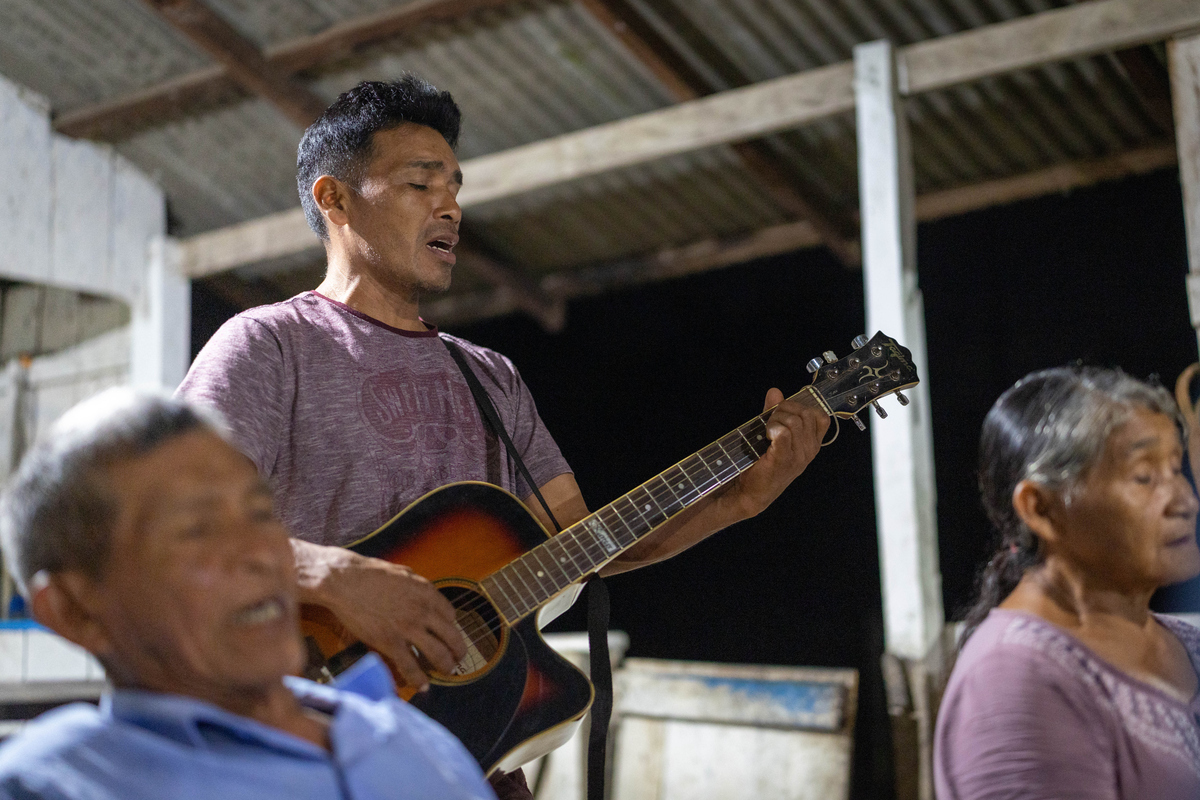
A single printed Bible in Sateré-Mawé is handled with reverence. On Thursday evenings, families study Scripture together with missionaries joining by Starlink from miles away.
Forty years after the gospel first arrived, Bom Samaritano has become something rare along the Andirá: a place where faith moves from one generation to the next.
Before Anyone Talks About Jesus
“I truly believe that compassion opens the door for the gospel to go further,” Grace says.
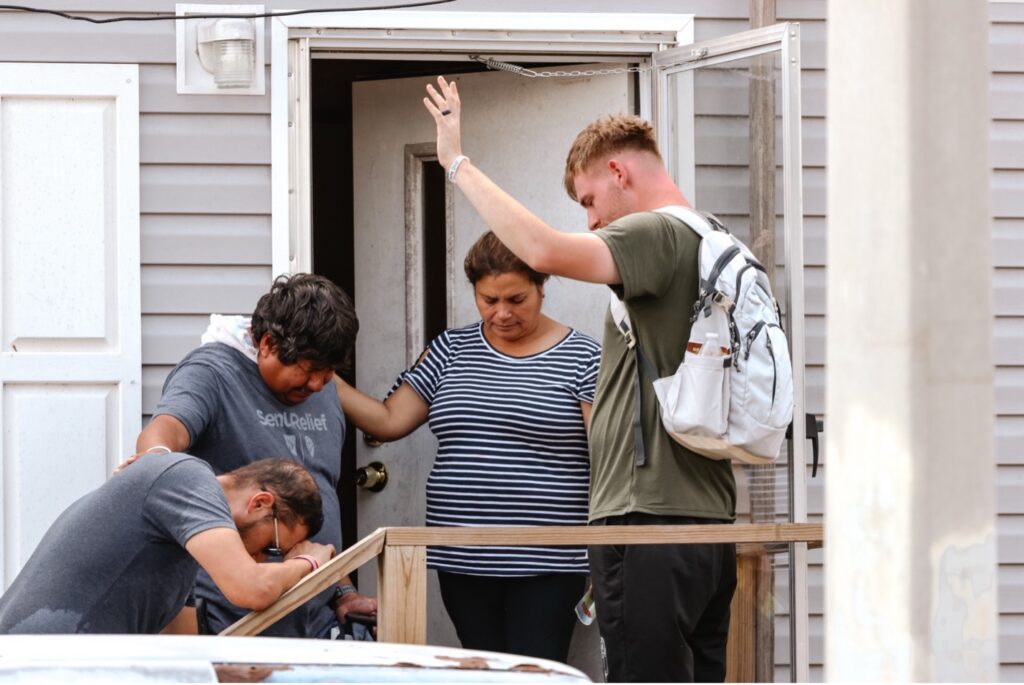
Along the Andirá, ministry often begins with ordinary things. A child being measured. A mother asking a question about nutrition. Eggs being unloaded from a boat. A conversation that ends in prayer.
Then, two weeks later, the boat comes back.
Over time, families begin to recognize the faces stepping onto the dock. Names are remembered. Questions grow more personal. Conversations stretch longer than they used to.
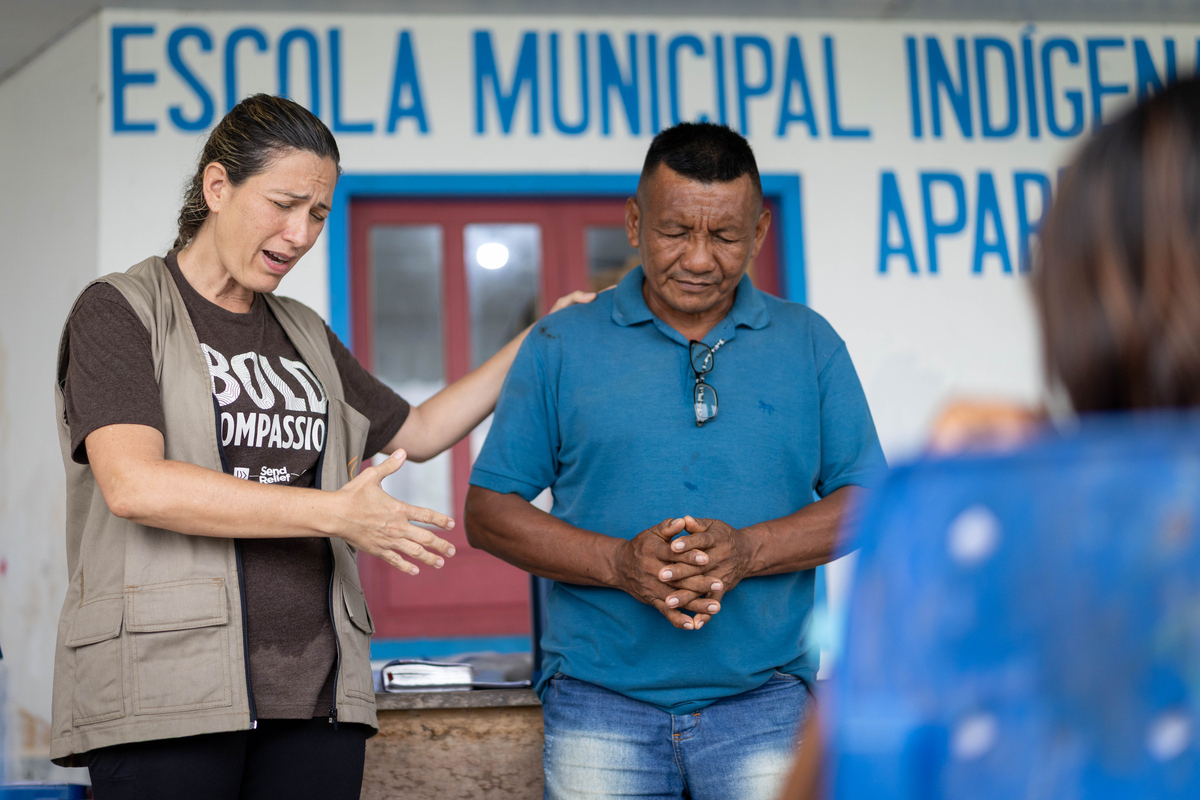
“When we tell them we want to care for their children, when we bring food and support and love them, their hearts begin to open,” Grace says.
The nutrition program addresses physical needs, but it also creates opportunities to sit with families, listen to their concerns, pray with them, and share the hope of Christ.
Along the Andirá, relationships are built one visit at a time.
The Work That Keeps Coming Back
Send Relief missionaries Trent and Kay Jones have served in Brazil for years, working alongside local churches, ministry partners, and indigenous communities throughout the region. Through those relationships, they came alongside Grace and the work already taking place along the river.
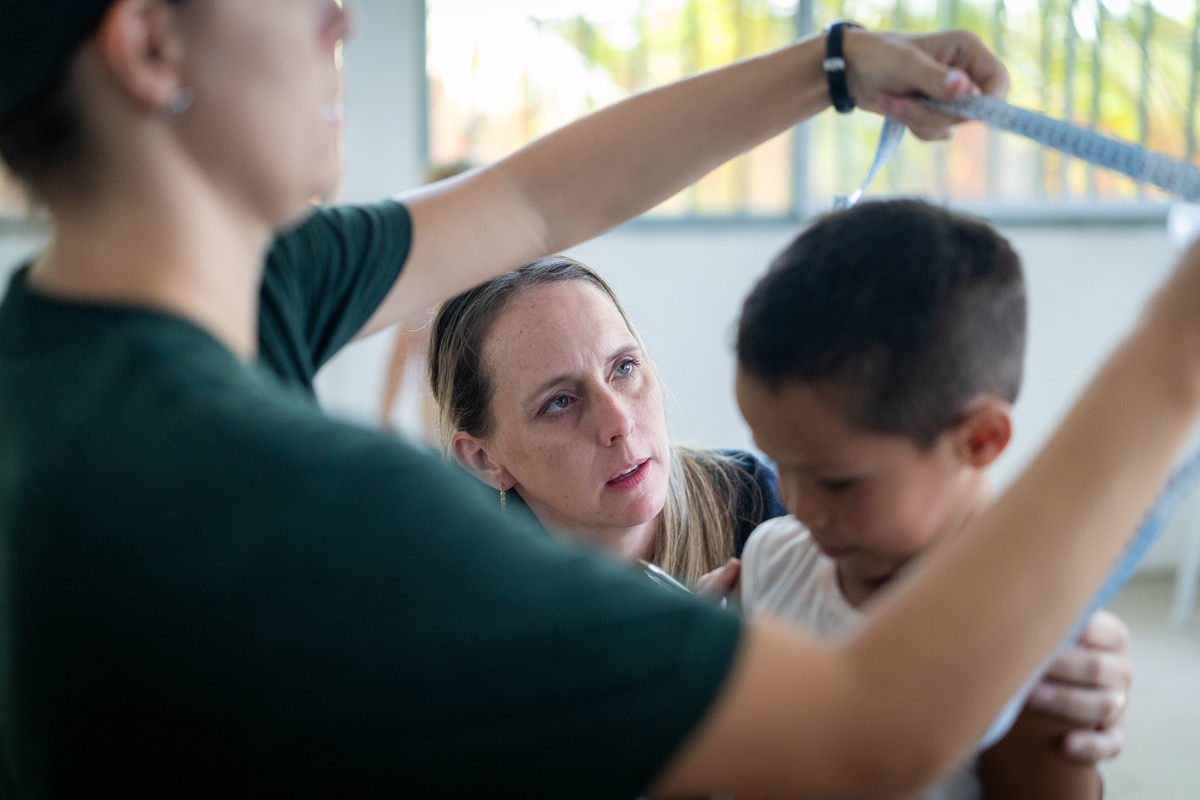
Today, the nutrition team travels from community to community with eggs, supplements, practical training, and the gospel. They celebrate milestones with families, answer questions, pray, and return to do it again. In a place where travel is measured in river miles and weather can change plans without warning, that kind of consistency is its own form of witness.
The team has seen what it produces. In an earlier project in the Polo Murutinga area, nearly 50 percent of malnourished children treated had recovered within six months. The work is not simply well-intentioned. It is effective.
A Farm, a House, and a People on the Move
For years, eggs have arrived by boat, and every trip depends on weather, fuel, schedules, and river conditions that can shift without warning. A flood can interrupt access. A delay ripples across multiple communities.
The team is working toward something more permanent.
With support from Send Relief, plans are taking shape for a community-managed chicken farm in Bom Samaritano with 400 laying hens capable of producing more than 300 eggs each day. Not shipped in from far away. Not dependent on a river that answers to no one. Produced here, by this community, for their children and for the villages around them.
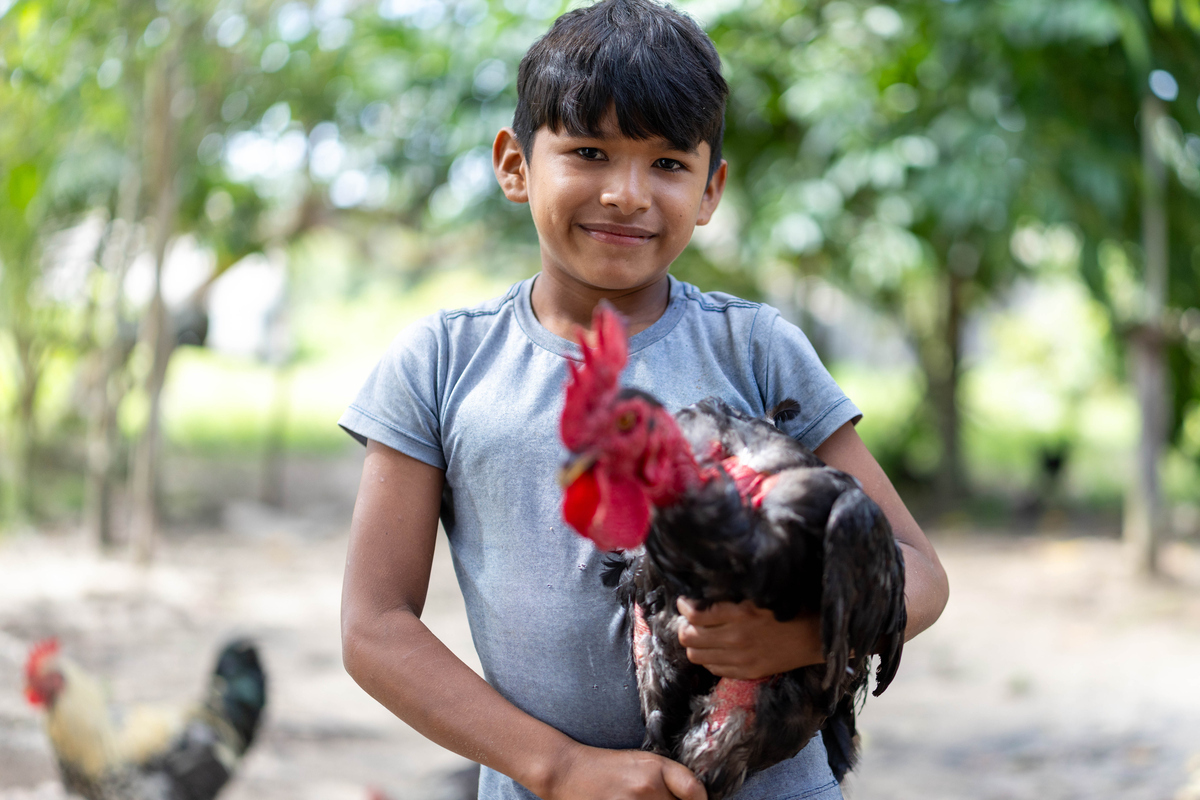
Local leaders are already engaged. Caretaker teams are being trained. A Brazilian agricultural specialist is helping ensure the farm can serve communities for years to come. A missionary house is also under construction, creating a home base for ministry, discipleship, and community care along the Andirá.
But the vision is not simply a farm that produces eggs. It is a gospel-rooted community becoming a sending community.
The believers of Bom Samaritano are preparing to go to other Sateré-Mawé villages along the river, carrying what they have learned about caring for children and the hope of Christ. They will share their faith in their own language, through relationships that already exist, with the neighboring communities they call their cousin tribes, from the credibility of lives already changed by the gospel.
When the Boat Comes Into View
Mariane still sits in the shade with the other mothers, watching the children nearby.
But the children move differently now.
They race through the village, chase chickens between houses, and help with chores.
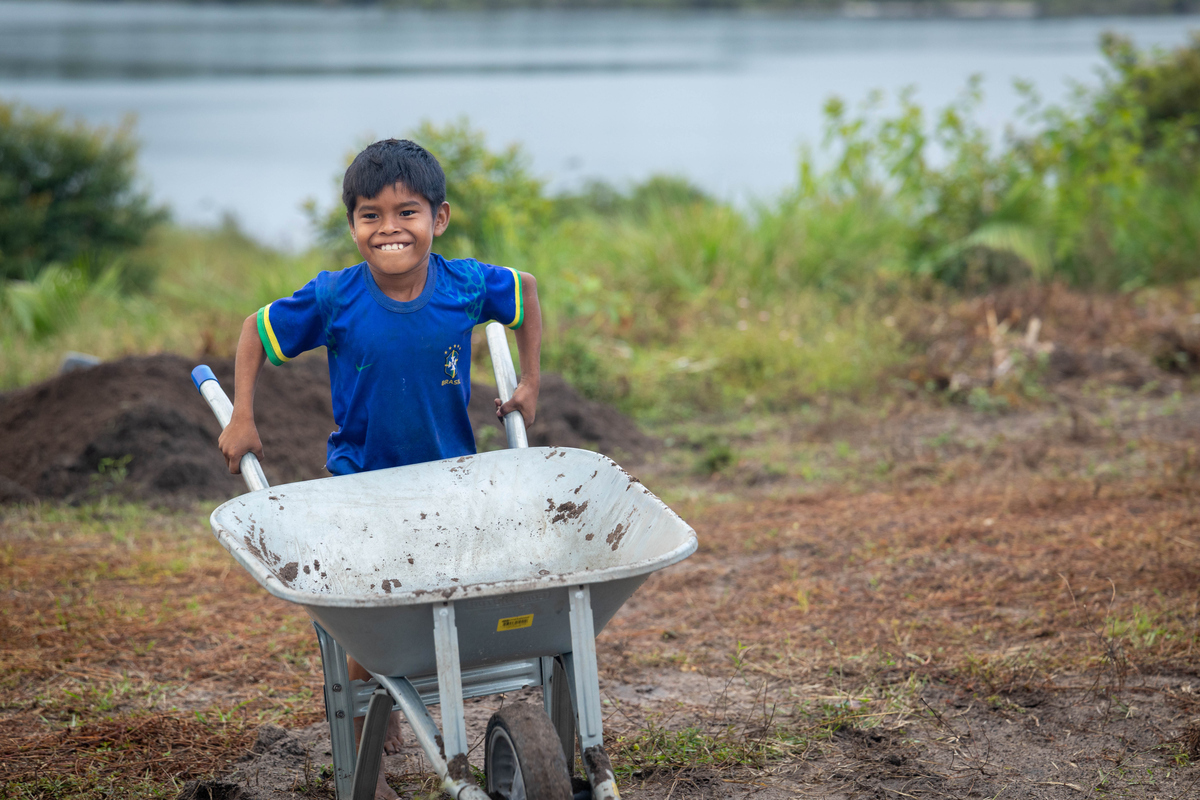
Children are growing stronger. Families are learning how to care for them. A farm is being built. A home for ministry is rising along the river.
Now, when the boat comes into view, Ranison is already on his feet.
He runs to meet it.